
Grindr - Gay Dating & Chat
Grindr LLCSocial
4.379.87K Reviews
- Version
- 26.24.0
- Installs
- 50.00M
- Age Rating
- Mature 17+
Screenshots
Our Review of Grindr - Gay Dating & Chat
 Analysis by Appyee
Grindr - Gay Dating & Chat is a social app built around one particularly important capability: helping gay, bi, trans, and queer people discover nearby conversations and connections. After spending time with it, I see its biggest strength less as a traditional dating profile system and more as a fast way to understand who is around, what kind of interaction they want, and whether a conversation is worth starting.
That speed can be genuinely useful. It can also make the experience feel intense, repetitive, or overly focused on quick judgments. My overall impression is that the app works best when I treat it as a tool for opening possibilities rather than as a guarantee of a date, relationship, or even a pleasant conversation. The right expectations make a noticeable difference.
Nearby discovery is the feature that shapes everything
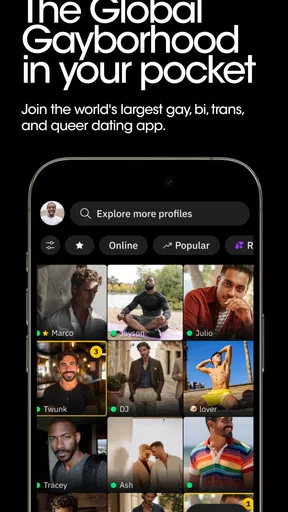
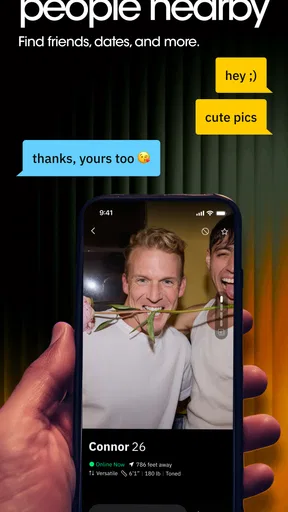
The central experience is the grid of people in the surrounding area. Instead of waiting for a long sequence of likes or matches, I can see a changing selection of profiles and decide where to direct my attention. That creates a very different rhythm from mainstream dating apps, where the process often feels more deliberately paced.
For someone new to a city, this local focus can be valuable. It gives a quick sense of whether the app is active nearby and makes it easier to find people whose distance, profile details, or stated intentions fit the moment. The same feature can be useful for people who are already settled somewhere but want to meet others outside their usual social circles.
I also found that proximity changes how carefully I read profiles. When a person appears to be realistically reachable, small details matter more: whether they explain what they are looking for, whether their tone feels respectful, and whether the profile gives enough information to begin a normal conversation. A nearby profile is not automatically a good connection, so the grid should be treated as a starting point, not a recommendation engine.
The practical value is choice with context: I can decide whom to contact based on more than a single photograph, while still recognizing that the app cannot judge character for me. That balance is important because the convenience of local discovery can otherwise encourage impulsive decisions.
What the first few minutes feel like
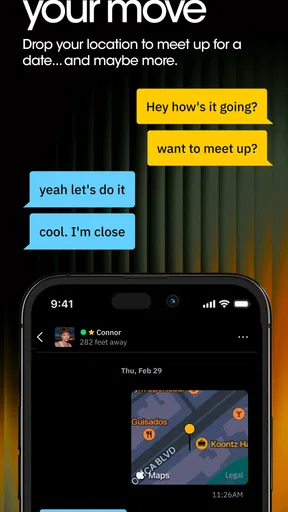
On opening the app, I can move quickly from browsing to messaging. That low friction is one of its clearest advantages. There is less ceremony than in apps that require mutual approval before a conversation can begin, and that makes it possible to act on a moment of genuine curiosity instead of waiting for a match.
It also means the quality of the experience depends heavily on my own boundaries. I get better results when I avoid sending the same vague greeting to everyone. A short message connected to something visible in a profile usually gives the other person a clearer reason to reply. If a profile offers almost no context, I prefer to ask a simple, non-invasive question rather than assume what the person wants.
That approach matters because the app brings together different goals. One person may be interested in dating, another in friendship, another in a casual encounter, and someone else may simply be exploring the community. Clear communication early on prevents a lot of wasted time. I would not use the absence of an immediate reply as a reason to keep pushing; moving on politely is part of using the app well.
The app is free to download and use, which lowers the barrier to trying it. Optional purchases range from $0.99 to $769.99 per item, so I would examine any upgrade carefully rather than assuming a paid tier is necessary. The free experience is enough to understand whether the local community and conversation style suit me before spending anything.
A realistic everyday use case
Imagine arriving in a new city for a few days. I might open the app in the evening, browse nearby profiles, and notice that the local activity is different from what I see at home. Rather than immediately arranging a meeting, I could start two or three conversations, explain that I am visiting, and ask for a low-pressure recommendation such as a neighborhood café or a place where queer people commonly socialize.
This is where the nearby capability becomes more than a dating shortcut. It can help reduce the isolation of travel and make a new place feel more approachable. Still, I would keep the first meeting public, tell a trusted person where I am going, and avoid sharing sensitive personal information too quickly. Fast discovery should not mean fast trust.
The same workflow can work for someone who has recently come out or moved away from a supportive community. The app may offer a way to see that other queer people are nearby without requiring an introduction through friends. That can be reassuring, although the emotional quality of the experience will vary depending on the local user base and the kind of conversations available.
How I make browsing more useful
I get more value when I use the grid as a sorting exercise instead of an endless feed. I look for profiles that communicate something specific, then focus on a small number of conversations. Trying to contact everyone creates noise and makes it harder to notice which exchanges feel mutual and respectful.
Another useful habit is to separate curiosity from commitment. A profile can catch my attention without being a reason to meet immediately. I can ask a few ordinary questions, notice whether the other person respects my pace, and decide later whether moving the conversation elsewhere makes sense. This is especially helpful when someone is very direct from the first message.
I also recommend reviewing my own profile after using the app for a while. If I want dates rather than casual chats, saying so plainly can discourage mismatched approaches. If privacy matters more to me, I should avoid details that reveal my home, workplace, or routine. A profile does not need to explain everything to be useful; it needs to communicate enough for the right people to start a conversation.
Where the speed helps, and where it creates friction
Compared with broad dating apps, Grindr feels more immediate and geographically focused. It does not require me to wait for a mutual swipe before I can express interest. That makes it better for spontaneous conversations and local discovery, while apps built around deliberate matching may feel more comfortable for people who want a slower filter before messaging.
Compared with general social networks, it is more focused on queer connections and makes it easier to identify people who are likely to understand that context. A general platform may offer more varied communities and a broader range of activities, but finding relevant local conversations there can take more work. Grindr’s specialization is therefore both its advantage and its limitation: it is focused, not a complete replacement for every kind of social interaction.
The fast grid can encourage appearance-first decisions. That is not unique to this app, but the pace makes the effect especially noticeable. I sometimes found myself making quick assumptions from limited information, then reminding myself that a photograph and a few lines cannot show reliability, compatibility, or kindness. Slowing down is not a technical setting; it is a user habit.
Another trade-off is that a large local audience can produce both opportunity and distraction. Grindr has more than 50 million installs and an average rating of 4.2 from around 1.6 million ratings, which suggests a very broad presence rather than a guarantee that every area will feel equally active. In practice, the experience depends on who is nearby and how many people share my intentions.
The mature audience is worth taking seriously. The app is rated Mature 17+, and I would not recommend treating it like a casual, all-ages social network. That rating reflects the kind of conversations and connections a user may encounter. Anyone who feels uncomfortable with direct adult dating discussions, sexual content, or uncertain intentions should consider a more moderated or slower-moving alternative.
Privacy and personal safety require active choices
I would be careful about moving a conversation from the app to another service. A request to switch immediately is not automatically suspicious, but it removes some useful context and can make it harder to step back. I prefer to establish basic trust first, avoid sending intimate material under pressure, and stop responding when someone ignores a clear boundary.
For an in-person meeting, I would choose a public location, arrange my own transportation, and let a friend know the plan. I would also avoid using my home as a first meeting point. These are simple steps, but they matter more in an app where nearby discovery can make a meeting feel conveniently close before I have actually learned much about the person.
People concerned about being recognized should think carefully about profile photos and identifying details. A recognizable image may make conversations easier, but it can also expose more than intended. I would choose images and wording based on my own privacy needs rather than copying what seems popular on the grid.
There is also an emotional safety issue. A short reply, sudden silence, or blunt rejection can feel personal even when it reflects timing or different expectations. I found the experience healthier when I treated each exchange as limited information, not as a verdict about my attractiveness or worth.
Who benefits most from this approach
This app is a strong fit for adults who want a concentrated queer social space, live in an area with an active nearby community, and are comfortable taking the initiative in conversations. It is particularly useful for travelers, newcomers, and people who want to meet others beyond their existing friend group.
It can also suit someone who dislikes the waiting period built into match-based apps. If I would rather send a thoughtful message than hope for a mutual swipe, the directness feels refreshing. The app gives me more control over whom I approach, although that control comes with the responsibility to communicate respectfully and accept disinterest.
I would be more cautious recommending it to someone seeking only a highly curated, relationship-first experience. A slower dating app with more structured profiles may be a better fit if I want compatibility questions, extended prompts, or a clear mutual-match stage before any message arrives. Likewise, someone looking mainly for hobby groups, event planning, or non-dating community discussion may find a broader social platform more suitable.
People in areas with few nearby users may also find the core feature less rewarding. The app can still be worth trying, but expectations should remain realistic: local discovery is only as useful as the local activity. In that situation, LGBTQ+ community groups, event apps, or general networks may provide more dependable ways to build connections.
Version, cost, and the decision to upgrade
The current version is 26.15.0 and it requires Android 8.0 or later. Grindr LLC is the developer, and the app has been available since February 25, 2011. Those details matter mainly because compatibility is easy to check before installing, while the long-running presence explains why many users may already recognize the service.
I would start with the free version and use it long enough to answer three practical questions: Are there enough nearby people for my needs? Do the conversations feel respectful? Does the basic browsing and messaging flow suit the way I want to connect? If the answer to those questions is no, paying for additional options is unlikely to solve the underlying mismatch.
If the free experience is useful but limited in a way that directly affects my routine, then an optional purchase may be worth considering. I would read the purchase screen carefully, check the renewal terms presented there, and avoid buying simply because the grid creates a sense of urgency. The broad price range means the cost can vary substantially, so a deliberate decision is more sensible than an impulse upgrade.
My final take after using the app
Grindr is at its best when nearby discovery is exactly what I need. It makes queer social and dating connections feel immediate, gives travelers and newcomers a practical way to find local conversations, and avoids the waiting structure of many conventional dating apps. That directness is the reason I would recommend trying it to the right person.
I would not describe it as effortless. The same speed that creates opportunity can bring mismatched intentions, appearance-first browsing, privacy concerns, and conversations that disappear without explanation. Users need to set boundaries, communicate clearly, and take safety seriously rather than expecting the app to filter every risk.
My recommendation is therefore specific: try it if you want a focused queer network and are comfortable managing fast, local interactions yourself. Start free, keep your profile honest but not overly revealing, and judge people by consistent behavior rather than proximity or photographs. If you prefer slow compatibility checks, structured relationship matching, or broader community activities, another kind of app may serve you better.
For me, the app’s real success is not that it turns every browse into a date. It is that it can make the first step toward a queer connection much easier, especially when I am somewhere new or do not already have a community around me. Used with patience and good boundaries, that is a meaningful advantage.
Privacy and Permissions
See what permissions an app requests and how it handles your data.
- Location
- approximate location (network-based), precise location (GPS and network-based)
- Photos/Media/Files
- read the contents of your USB storage, modify or delete the contents of your USB storage
- Storage
- read the contents of your USB storage, modify or delete the contents of your USB storage
- Camera
- take pictures and videos
- Microphone
- record audio
- Wi-Fi connection information
- view Wi-Fi connections
- Other
- view network connections, change network connectivity, full network access, close other apps, change your audio settings, run at startup, draw over other apps, control vibration, prevent device from sleeping, Google Play license check, read Google service configuration
Verdict
Strengths of Grindr - Gay Dating & Chat
- Large LGBTQ+ user base makes finding nearby matches easier.
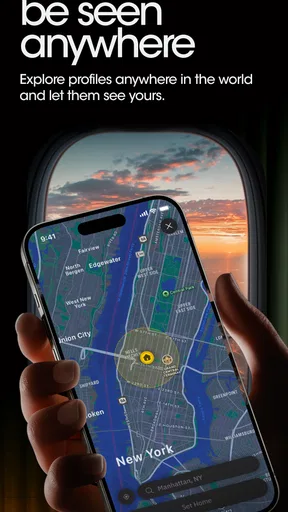
- Location-based browsing helps connect with people in your area.
- Free version includes basic profile browsing and messaging.
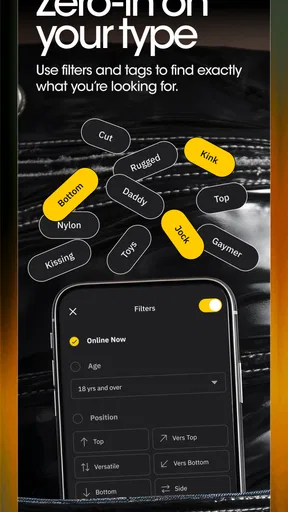
- Profile filters make it easier to narrow down potential matches.
- Available on both Android and iOS devices.
Limitations of Grindr - Gay Dating & Chat
- Many useful filters and features require a paid subscription.
- Nearby distance settings may raise privacy concerns for some users.
- Profiles can include inactive, incomplete, or misleading accounts.
- Advertising and promotional prompts may interrupt the free experience.
- The app may feel overwhelming in densely populated areas.
Similar Picks in This Category
View All
Meta Platforms, Inc.4.6

Instagram4.0

Likee-Live, Chat & Party Games
Likeme Pte. Ltd.4.4

Facebook Lite
Meta Platforms, Inc.4.5

TikTok - Videos, Shop & LIVE
TikTok Pte. Ltd.4.0

Moj: Free Short Drama & Reels
ShareChat4.1
Frequently Asked Questions
What is Grindr - Gay Dating & Chat used for?
Grindr is a location-based social and dating app designed primarily for gay, bisexual, transgender, queer, and questioning adults. After creating a profile, users can browse nearby profiles, exchange messages, share photos, and arrange conversations or dates. The app can also be used simply for meeting people and building connections, although the experience depends heavily on your location and the activity of nearby users.
Is Grindr free to download and use?
Grindr can be downloaded for free on compatible Android and iOS devices, and the free version provides access to basic profile browsing, messaging, and social features. However, optional paid subscriptions and in-app purchases unlock additional tools, such as more profile visibility, advanced filters, expanded grids, and other convenience features. Before subscribing, review the pricing, renewal terms, and available features in your region.
Does Grindr require access to my location?
Grindr relies on location information to show profiles near you, so location access is an important part of its core functionality. You can usually manage permission settings through your phone, but limiting access may reduce the app’s usefulness or affect nearby profile results. Because location and identity can be sensitive, consider using the most restrictive permission that still works for you and avoid revealing your exact address.
Is Grindr safe and private to use?
Grindr includes tools such as blocking and reporting to help users manage unwanted interactions, but no dating or chat platform can eliminate every safety risk. Avoid sharing financial information, passwords, personal documents, or precise home and work details. Take time to verify someone’s identity, be cautious with private photos, and meet in a public place if you decide to meet offline. Also review privacy settings before completing your profile.
Can I use Grindr without showing my real name or face?
Grindr generally allows users to choose a display name and decide how much personal information to include in their profile. You may be able to limit identifying details and control which photos or information you share, but completely anonymous use can make genuine communication more difficult and may affect trust. Always follow the app’s current community guidelines, and remember that screenshots or shared messages may still expose content outside your control.
